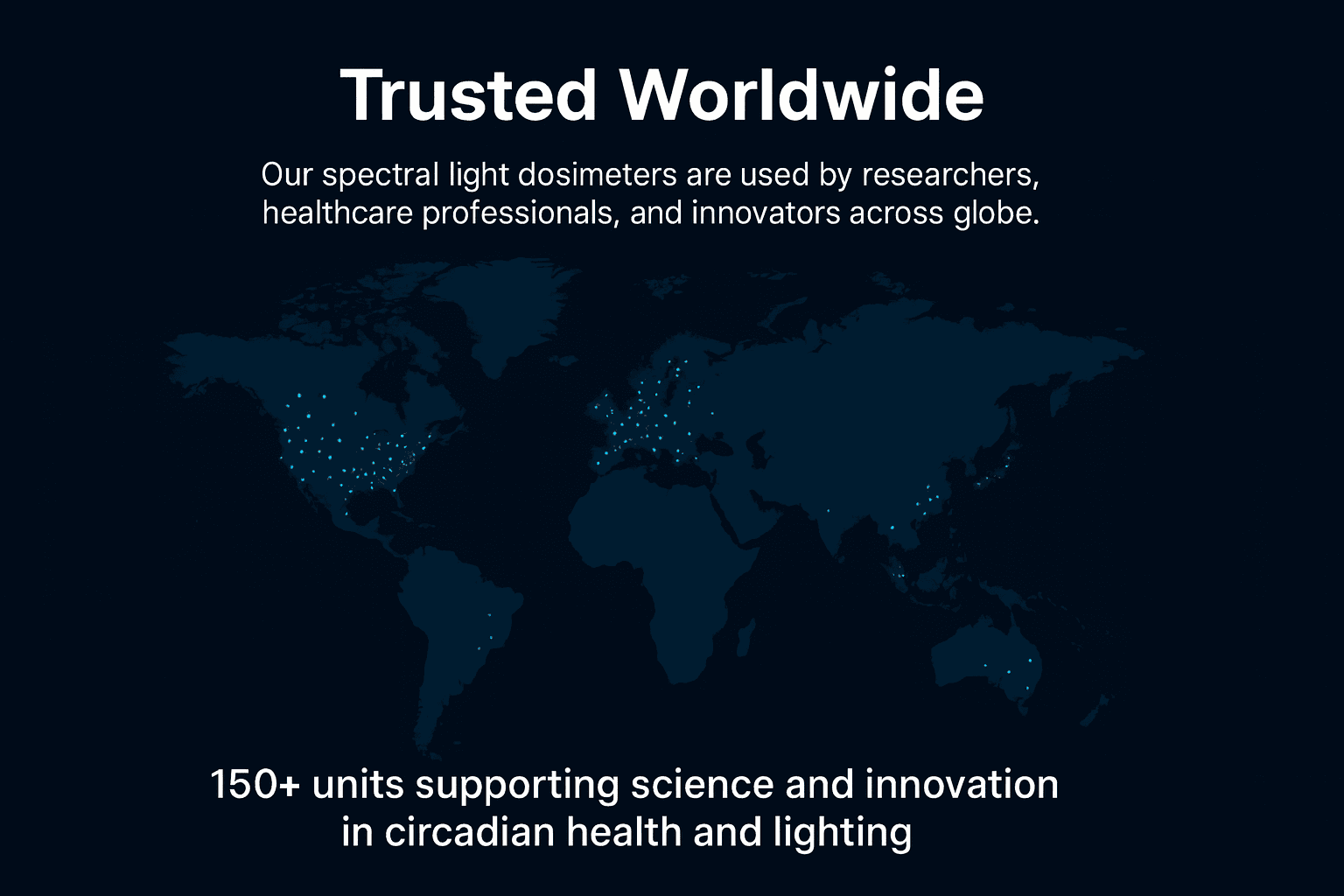
Miniature spectral light dosimeters for circadian science and healthy lighting
PhotoSpec Labs develops world-leading wearable and building-integrated dosimeters that measure the light shaping our health, wellbeing, and productivity. From hospitals and aged care to workplaces, smart buildings, and research labs, our technology helps validate and design healthier lighting environments.

Why Measuring Light Exposure Matters
- Healthcare & Aged Care – improve recovery, sleep, and wellbeing for patients, residents, and staff.
- Workplaces & Education – support productivity, alertness, and learning through better circadian lighting.
- Research & Innovation – provide precise spectral data for universities, R&D, and lighting manufacturers.
- Architecture & Building Design – validate and optimise lighting for healthy, human-centric environments.
- Horticulture & Agriculture – optimise plant growth and sustainability with spectral light monitoring.
- Animal Welfare – ensure appropriate lighting conditions in laboratories, zoos, and aquariums.
Learn & Explore
Insights on circadian lighting, spectral measurement, and healthy environments.
Latest Posts
26 August 2025Introduction
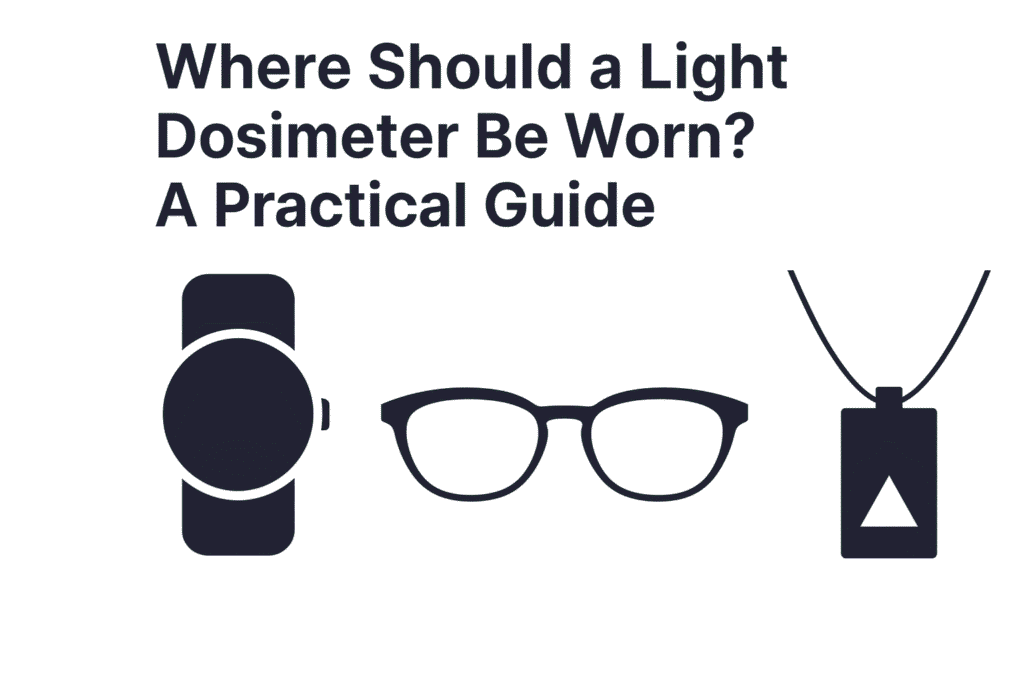
When using a wearable light dosimeter, positioning is one of the most important factors affecting data accuracy and user experience. Researchers and manufacturers have explored several options — including the wrist, glasses, and pendant placement. Each has its advantages and challenges. This guide reviews these common approaches and explains why pendant positioning is often considered the most practical and reliable solution.
Wrist-worn devices and wearable light dosimeter positioning
Wrist-based dosimeters are appealing because most people are accustomed to wearing a watch. They are easy to put on and familiar in design. However, there is a major drawback: sleeves frequently cover the sensor. Even partial occlusion significantly reduces accuracy, as the wrist is not always exposed to the same light that reaches the eyes. For circadian and spectral light research, this makes wrist-based placement less reliable.
Glasses-mounted dosimeters: accuracy vs. user acceptance
Another option is to mount sensors on eyeglasses. This has the advantage of positioning the sensor near the eyes, where circadian-effective light is received. Yet this approach comes with two challenges:
Not universal. Not everyone wears glasses, which limits adoption.
Perception and comfort. A sensor attached to glasses can appear intrusive, raising concerns about privacy and recording. This often makes participants and professionals less comfortable wearing them in real-world situations.
Pendant dosimeters: the most reliable wearable light dosimeter positioning
Pendant positioning offers a practical compromise between accuracy, comfort, and acceptance. Worn at chest height, the sensor receives light exposure that closely matches the eyes, without the frequent obstruction seen with wrists or the invasiveness of glasses.
Key advantages include:
Accuracy: Consistently exposed to ambient light with minimal obstruction.
Universality: Suitable for anyone, regardless of clothing style or eyewear.
Comfort: Lightweight and discreet, blending naturally into daily wear.
Acceptance: Appears less intrusive, encouraging regular use in studies and workplaces.
Why pendant placement supports research and real-world Use
For circadian lighting studies, healthcare environments, or workplace evaluations, pendant placement ensures robust, repeatable data. Researchers benefit from accuracy, while participants appreciate the comfort and discretion. This balance between data quality and usability is why pendant positioning is widely adopted in wearable light dosimetry.
Conclusion: choosing the best wearable light dosimeter positioning
Dosimeter positioning directly influences both measurement quality and user compliance. Wrist and glasses options offer convenience or directness, but they introduce significant challenges. Pendant positioning stands out as a reliable, comfortable, and widely accepted method — making it the most effective choice for accurate and practical light dosimetry.
Explore our pendant light dosimeters [...]
Read more...
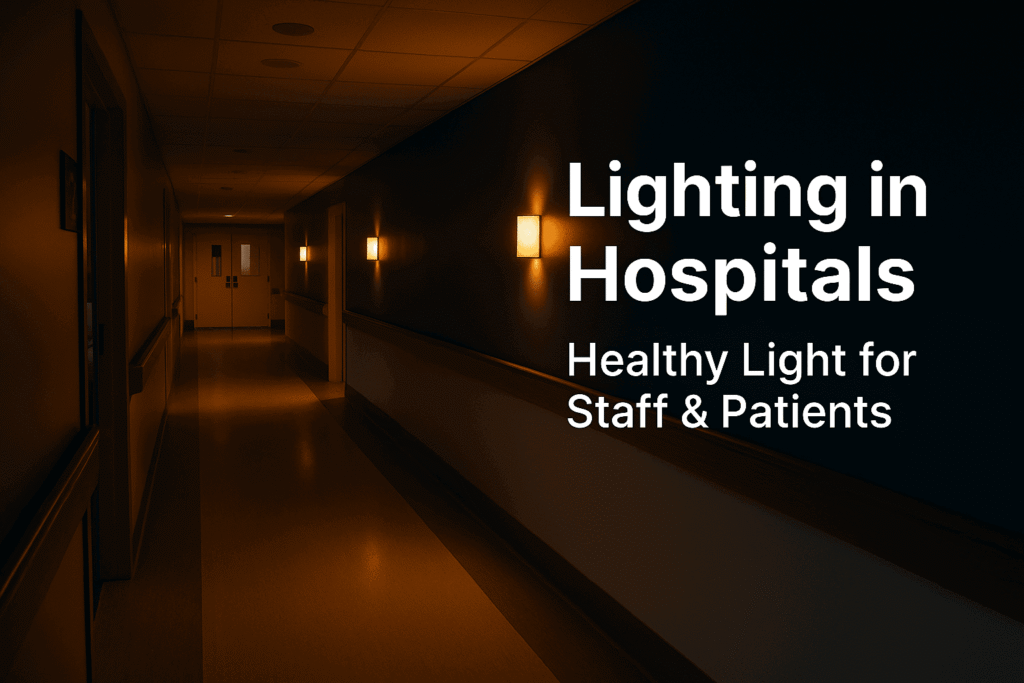
18 August 2025Hospital lighting needs to protect patient rest and keep clinicians alert at all hours. This page outlines day–night lighting strategies, how to measure biological effectiveness using melanopic EDI (CIE S 026), and a practical rollout plan supported by spectral light dosimetry.
Why hospital lighting needs a new approach
Traditional lighting targets visual tasks and safety. In 24/7 care, we also need to manage circadian impact: patients need darkness and warm, low-melanopic light at night for recovery; staff sometimes need short, brighter boosts for critical tasks without flooding wards with stimulating light. Getting the timing, spectrum and intensity at the eye right is key.
Day–night principles (quick scan)
Daytime near patients: good vertical illuminance and daylight where feasible; balanced spectrum for comfort and engagement.
Evening: reduce short-wavelength content; maintain safe wayfinding.
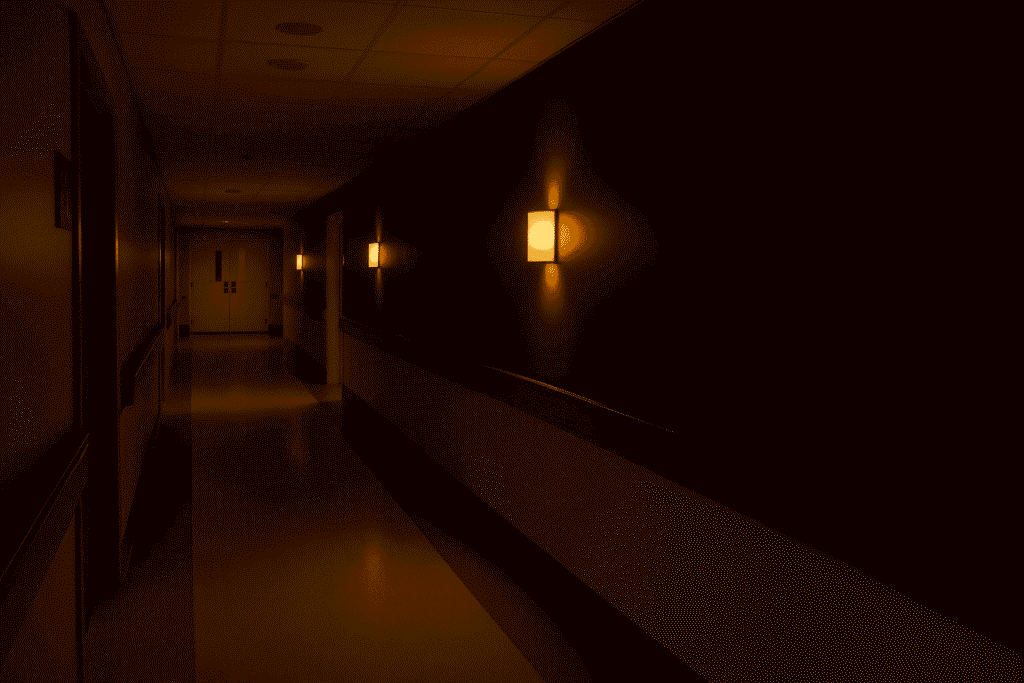
Night in wards: very low melanopic pathway lighting, shielded from faces; warm tones.
Nurse stations / meds prep: warm/neutral base with on-demand task boosts (higher melanopic EDI) that time out automatically.
Corridors: low-melanopic navigation with clear contrast; local task boosts only where needed.
What to measure (and where)
Measure at the eye using spectral light dosimeters to capture actual exposure:
Patient positions: bed (reclined and seated), chairs in bays, family seating.
Staff positions: nurse stations, meds prep areas, corridors, treatment rooms.
When: log across two weeks to cover rota patterns, weekends and special events.
Metrics: melanopic EDI (primary), photopic lux, CCT; optional α-opic channels.
Why spectral dosimetry?It reports the spectrum + intensity needed to compute biologically relevant metrics (CIE S 026), not just lux. Features like non-wear detection and event logging improve data quality and interpretation.
Design details that make the difference
Glare control: indirect distribution, shielding, diffusers; manage UGR.
Colour quality: high TM-30/CRI for accurate skin/linen/med assessment.
Controls: pre-set scenes (rounds, meds, code) with soft fades and auto time-outs.
Wayfinding at night: low-level warm guidance rather than bright overheads.
Acoustics & flicker: quiet drivers, flicker-free dimming to reduce fatigue.
Documentation areas: task boosts that raise melanopic EDI locally without spilling into wards.
Example night-shift pattern (conceptual)
Wards: 1) warm, dim base; 2) very low melanopic pathway; 3) bedside exam task light on demand.
Stations: 1) warm/neutral base; 2) 5–15 min task boosts for prep and review; 3) automatic return to base.
Corridors: low-melanopic navigation; localised task hotspots.
(Exact values should be set by measurement, clinical policy and trials; pattern shown is a starting framework.)
Rollout plan
Baseline – Record two weeks of at-eye exposure with spectral dosimeters; collect staff feedback on alertness, glare, sleep disruption complaints and incidents.
Target setting – Define morning/day targets for communal spaces, evening reductions near patients, and night pathways with minimal melanopic content.
Pilot scenes – Program four dayparts; verify glare, TM-30/CRI, dimming behaviour and transitions.
Pilot evaluation (4–8 weeks) – Re-measure; compare alerts/errors, sleep disturbance notes, and staff surveys.
Scale – Extend to additional wards; train staff with simple pictorial guides.
Maintain – Quarterly spot checks with spectral logging; seasonal tuning.
Frequently asked questions
Do we need tunable white everywhere?No. Many goals can be met with warm night lighting, good optics, and scene controls. Use tunable where it delivers clear operational value.
Will ‘task boosts’ disrupt patients?Not if boosts are local, short and shielded. Use timed returns to base, and limit spill into wards.
Is melanopic EDI enough for reporting?It’s the most practical CIE S 026 metric for circadian impact. Keep photopic lux for visual tasks and add α-opic channels if required by spec.
How PhotoSpec Labs can help
Spectral light dosimeters for at-eye logging (patients and staff).
Measurement plans tailored to wards, stations and corridors.
Simple reports with time-of-night profiles and before/after comparisons.
Support for tuning scenes and verifying outcomes.
Contact us now! [...]
Read more...
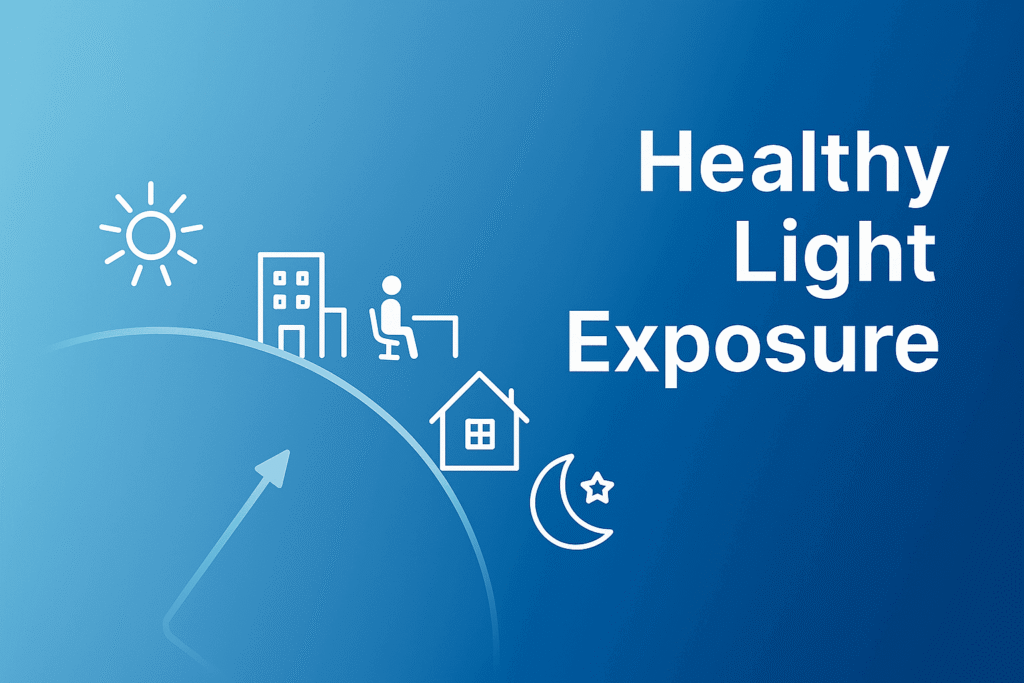
18 August 2025Healthy light exposure isn’t just “more light” or “less blue at night”. It’s the right spectrum, at the right time, at the right intensity—measured at the eye. This guide explains simple daily targets and how to verify them using melanopic EDI (CIE S 026) with spectral light dosimeters.
What “healthy light exposure” means
Healthy light exposure balances visual needs (seeing clearly and comfortably) with biological needs (supporting circadian rhythms, alertness, and sleep). The key variables are:
Timing – when light reaches the eyes
Spectrum – colour content (particularly short-wavelength/blue-cyan)
Intensity at the eye – not just room lux, but what the person actually receives
Duration & pattern – short boosts vs steady background
Why timing matters
Light detected by ipRGCs influences the suprachiasmatic nucleus (SCN)—the body’s master clock.
Morning/early-day light tends to advance the clock (earlier sleep/wake).
Late-evening/night light tends to delay the clock (later sleep/wake).Well-timed exposure improves sleep onset, mood, cognition and daytime alertness.
Simple daily pattern (rules of thumb)
Morning (first 2–4 hours after waking):
Prioritise daylight or bright, cooler-tone electric light.
Aim for higher melanopic EDI at the eye (see measuring below).
Get outside if possible—even 10–30 minutes helps.
Midday–afternoon:
Maintain comfortable, glare-controlled light for tasks.
Keep sufficient vertical illuminance at eye level to sustain alertness.
Evening (2–3 hours before bed):
Dim and warm the environment; reduce short-wavelength content.
Lower melanopic stimulation; use task lights rather than high overheads.
Night:
Keep way-finding light very low melanopic (warm/amber).
Avoid bright screens pointed at the face; enable night modes if used.
Measuring healthy light exposure (keep it practical)
Use CIE S 026 metrics to quantify biological effectiveness.
Melanopic EDI (lux) – the most practical single measure for circadian-effective light.
Optional: other alpha-opic EDIs (cyanopic, chloropic, erythropic, rhodopic) for detailed analysis.
How to measure:
Measure at the eye (wearable pendant or eye-level logger).
Log across typical days, including weekends.
Summarise by time windows (morning/afternoon/evening/night).
Instruments:
Spectral light dosimeters (e.g., PhotoSpec Labs devices) record spectrum + intensity to compute melanopic EDI and related metrics.
Environment-specific tips
Home:
Breakfast near a bright window; consider a daylight walk.
Create an evening wind-down: warm lamps, low positions, indirect light.
Office/knowledge work:
Ensure good vertical illuminance at eye level in the morning.
Control glare (UGR), use high colour fidelity (TM-30/CRI), and allow user overrides.
Healthcare & aged care:
Provide daytime communal areas with higher melanopic EDI.
Bedrooms and corridors at night: warm, low-melanopic guidance lighting.
Education:
Morning lessons in brighter, cooler conditions; mellow late-day scenes.
Maximise safe daylight exposure during breaks.
Shift work:
Before night shifts: timed task boosts for alertness; during breaks keep light moderate.
Post-shift: minimise bright morning light to protect sleep opportunity.
A sample “healthy light day”
07:30–09:00: daylight or bright, cooler-tone indoor light; brief outdoor time if possible.
09:00–16:00: comfortable, glare-controlled work light; regular daylight breaks.
18:00–21:00: warm, dimmer home lighting; avoid bright downlights.
21:00–sleep: minimal melanopic light; warm task lights and screen night modes.
(Adjust for season, latitude and chronotype. See: Chronotype).
Common pitfalls (and easy fixes)
“Lux is enough.”Photopic lux alone misses biology. Add melanopic EDI to your checks.
Too bright, too late.Bright, cool light in the late evening delays sleep. Warm and dim instead.
One scene for all.Provide time-of-day scenes and personal control where possible.
Great numbers, poor comfort.Pair circadian metrics with visual quality: UGR, TM-30/CRI, uniformity.
Frequently asked questions
Do I need tunable white?Not always. You can combine daylight access, warm evening lamps, and good controls to achieve most goals.
How long should morning exposure be?Even 10–30 minutes of bright/daylight exposure helps. More is typically better, within comfort and practicality.
What about screens at night?Use night modes, reduce brightness, increase viewing distance, and prioritise ambient warm light over bright overheads.
Contact us now!
Want to measure and improve healthy light exposure in your building or study?PhotoSpec Labs provides spectral light dosimeters, analysis and simple reporting to help you tune lighting for sleep, mood and performance. [...]
Read more...
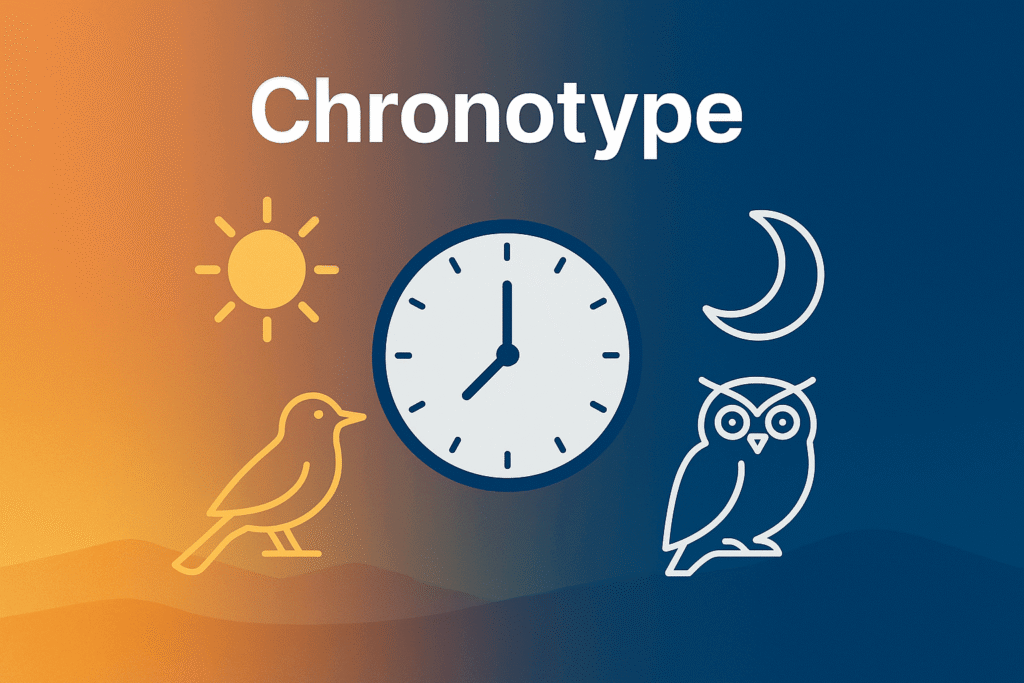
18 August 2025Definition:Chronotype describes an individual’s natural preference for the timing of sleep and daily activity (for example, “morning lark” or “night owl”). It reflects the timing of the internal circadian clock and influences when a person feels most alert or sleepy.
Why it matters:Understanding chronotype helps align light exposure, work schedules and routines with biology. In practice, morning types benefit from earlier light, while evening types may need stronger morning light and reduced late-evening stimulation to maintain healthy sleep timing.
How light shapes chronotype:
Morning exposure to brighter, blue-enriched light tends to advance the circadian clock (earlier sleep/wake).
Late-evening light tends to delay the clock (later sleep/wake).
Measuring the dose, spectrum and timing of light at the eye with spectral light dosimeters supports personalised strategies for sleep, study and work.
Assessment:Chronotype can be estimated using questionnaires (for example, morningness–eveningness scales) and by tracking sleep timing. Objective light-and-sleep logging provides a clearer picture of whether exposure supports or conflicts with a person’s natural preference.
Applications:
Shift-work planning and adaptation in healthcare and industry.
School and workplace start times, daylight access and break scheduling.
Personal sleep improvement and jet-lag management.
Building and lighting design that offers time-of-day scenes and access to daylight.
Related terms:
Circadian Rhythms
Circadian Stimulus
Melanopic EDI
ipRGCs
CIE S 026 [...]
Read more...
18 August 2025Night-shift lighting must keep clinicians alert while protecting patient rest. This guide shows how spectral light dosimeters can quantify real exposure at the eye, align scenes to circadian goals, and verify change using CIE S 026 metrics such as melanopic EDI.
Why measure, not guess
Hospitals often rely on installed specifications or photopic lux readings that miss the biological effect of light at the eye. Spectral light dosimeters capture the spectrum and intensity where it matters—on staff and patients—so you can balance three competing needs:
Staff alertness and safety during clinical tasks
Patient sleep and recovery in wards and bays
Quiet-hour navigation for rounds and emergencies
The biological context (in brief)
Light detected by ipRGCs influences the suprachiasmatic nucleus (SCN), shaping circadian timing and acute alertness. Metrics from CIE S 026—especially melanopic equivalent daylight illuminance (melanopic EDI)—provide a standard way to discuss “how stimulating” a light scene is biologically. Evening and night scenes typically aim for lower melanopic activation around patients, while task boosts can support staff briefly when needed.
What a spectral light dosimeter adds
At-eye truth: Logs exposure as worn by staff or placed at patient head height.
Spectral detail: Reports melanopic EDI and other α-opic channels, not just lux.
Context awareness: With features like non-wear detection, event logging, and motion cues, data stays clean and interpretable.
Before/after verification: Quantify improvements when you retune scenes or replace luminaires.
A practical night-shift lighting pattern (conceptual)
Wards (patient zones):
Very low melanopic pathway lighting for checks.
Warm tones, shielded sources, minimal spill into faces.
Nurse stations & meds prep:
Generally warm/neutral base.
Timed task-boost scenes (short, higher melanopic EDI) for critical work, auto time-out to avoid drift.
Corridors:
Low melanopic navigation with clear contrast; add local task boosts near crash carts or documentation points.
(Exact values should be determined by measurement and clinical policy; the pattern above is a starting point, not a prescription.)
Measurement protocol (quick start)
Where:
Staff: pendant-style dosimeter worn on lanyard (chest height).
Patient: stand or clip at approximate eye position in bed, shielded from tampering.
When:
Two full weeks capturing workdays, weekends, and rota variations.
What to log:
Melanopic EDI (primary), photopic lux, CCT if available.
Note events: rounds, meds prep, admissions, emergency calls (use device event logging if supported).
Data quality:
Enable non-wear detection to exclude pocketed/covered periods.
Cross-check with simple activity diaries from a small staff cohort.
Outputs:
Time-of-night plots (box plots or heatmaps) of melanopic EDI at eye level by location/role.
“Boost exposure” analysis: duration and timing of high-stimulus intervals near nurse stations.
Interventions you can test
Shielding & distribution: Add baffles/diffusers; redirect luminaires away from beds.
Spectral tuning: Warmer spectra in wards at night; neutral/warm base at stations with on-demand boosts.
Controls: Pre-set scenes (rounds, meds, code) with auto time-outs; slow fades to avoid startle.
Wayfinding: Low melanopic floor or wall guidance strips rather than bright overheads.
Verification loop (keep it lightweight)
Baseline: 1–2 weeks of dosimetry + staff feedback.
Tuning: Adjust scenes, optics, and controls in one zone.
Pilot: 4–6 weeks, repeat logging and incident notes (noise complaints, sleep disruptions, task errors).
Scale: Roll out and schedule quarterly spot checks.
Safety, privacy and governance
Use de-identified IDs on devices and exports.
Inform staff and patients about purpose and data handling.
Store datasets on approved hospital systems; limit access to the improvement team.
Coordinate with clinical governance, infection control, and estates.
What success can look like
Fewer “stray” high-melanopic exposures in wards during quiet hours.
Short, well-timed task boosts at stations instead of continuous stimulation.
Staff reporting steadier alertness with less glare and fewer headaches.
Patients reporting better night-time rest (subjective measures), with fewer disturbances logged.
Frequently asked questions
Do we need tunable white throughout?Not necessarily. You can combine fixed warm sources in wards with local neutral/warm task boosts at stations. Controls matter as much as hardware.
Is melanopic EDI enough?It’s the most practical CIE S 026 metric for night-shift aims. You can also review other α-opic channels if the specification calls for it.
How many devices do we need?Start with a small pool (e.g., 6–12 units) rotated across roles and spaces. Prioritise high-impact locations for baseline and pilot.
Call to action
If you’re exploring night-shift optimisation, PhotoSpec Labs can help you measure, tune and verify lighting with spectral dosimetry—balancing alertness and rest without guesswork.
Contact us now! [...]
Read more...
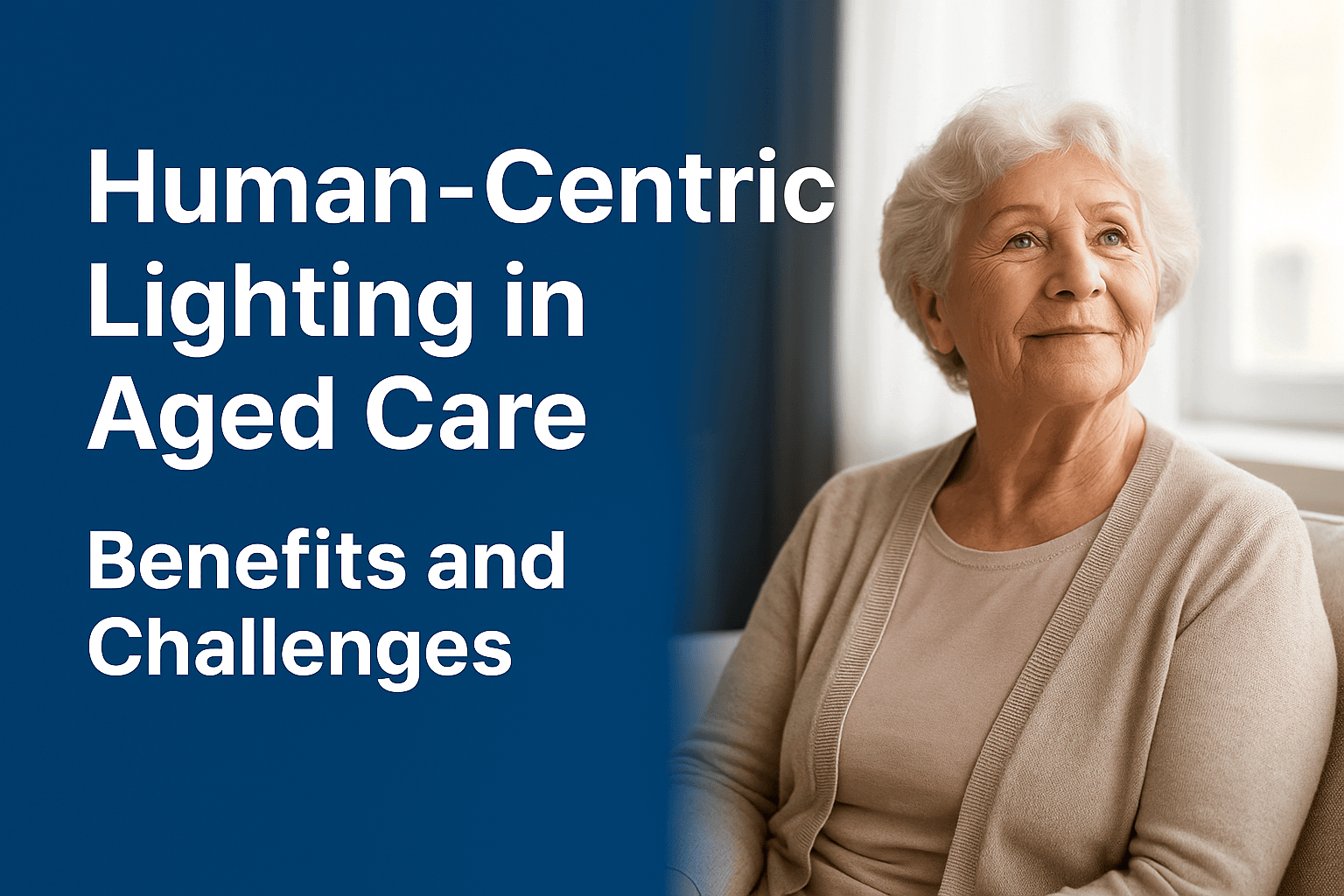
18 August 2025Human-centric lighting (HCL) can improve sleep, mood and safety in aged-care settings — but it must be done carefully. This guide covers benefits, common pitfalls, circadian-aligned targets (e.g., melanopic EDI), and a practical, measurable rollout plan.
What human-centric lighting means in aged care
Human-centric lighting is a design approach that supports visual performance, comfort and biology. In aged care, the biological component becomes critical: residents often have fragmented sleep, limited daylight access, and higher sensitivity to glare. HCL aims to deliver day-appropriate, spectrum-aware light in the morning and rest-supportive light in the evening and at night, while maintaining visual comfort and safety.
Key benefits (when implemented well)
Better sleep and circadian alignment:Morning exposure to higher melanopic stimulus can strengthen day–night rhythms, supporting sleep onset and stability.
Mood and agitation:Daytime light with adequate melanopic EDI can support alertness and reduce late-day agitation (“sundowning”) in dementia care.
Safety and falls risk:Good vertical illuminance, contrast, and low-glare luminaires improve navigation. Warm, low-melanopic night lighting can aid toileting without fully waking residents.
Daytime function and cognition:Tuned daytime spectra can help with engagement in activities and therapy.
Challenges to plan for (and how to mitigate)
Glare and visual discomfort:Older eyes are more glare-sensitive. Use indirect distribution, diffusers, and careful UGR control. Provide high-CRI/TM-30 fidelity to aid colour discrimination.
Evening over-stimulation:Blue-rich lighting too late can delay sleep. Implement warmer, low-melanopic scenes after mid-evening; use task lighting for staff where needed.
One-size-fits-all scheduling:Residents have different routines. Provide zonal control (lounges vs bedrooms) and allow manual overrides for care staff.
“Lux-only” compliance:Photopic lux alone does not represent biological effect. Incorporate CIE S 026 metrics such as melanopic EDI and, where relevant, report other alpha-opic channels.
Measurement gaps:Commissioning often omits verifying real at-eye exposure. Use spectral light dosimeters to validate conditions where residents actually spend time.
Design principles (fast checklist)
Morning (e.g., 08:00–12:00):Cool-neutral CCT, adequate vertical illuminance at eye level, higher melanopic EDI in communal spaces. Daylight integration where possible.
Afternoon (12:00–17:00):Maintain alertness, avoid excessive contrast. Consider subtly warming towards late afternoon.
Evening (17:00–21:00):Shift to warmer spectra and lower melanopic content, maintain enough horizontal illuminance for activities and safety.
Night (21:00–06:00):Very low melanopic pathway lighting (warm/amber), localised night-lights for care tasks, minimise spill into residents’ faces.
Visual quality throughout:High CRI/TM-30, low glare (UGR), good modelling, accessible controls, and quiet luminaires (no flicker or audible buzz).
Measurement and verification (keep it practical)
What to measure:At the eye (seated and standing) in resident-occupied zones: lounges, dining, activity spaces, corridors, and bedrooms (bed and chair positions).
Which metrics:Report melanopic EDI (and optional alpha-opic EDIs) per CIE S 026; record photopic lux for visual tasks; note CCT and CRI/TM-30 where relevant.
How to measure:Use spectral light dosimeters (pendant-style or eye-level placement). Log across multiple days to capture real patterns, including weekends.
Non-wear detection & events:If your logger supports non-wear detection and event logging, flag invalid data and annotate activities (meals, therapy, outdoor time).
Reporting:Summarise by time windows (morning/afternoon/evening/night) with box plots for at-eye melanopic EDI, plus notes on glare/contrast observations.
A step-by-step rollout plan
Baseline audit (1–2 weeks):Log at-eye exposure in key spaces; capture staff feedback on sleep, agitation, night-time events, and wayfinding issues.
Set targets:Define morning melanopic EDI ranges for communal spaces, evening reductions in resident areas, and night pathways with minimal melanopic content.
Prototype scenes:Program tunable luminaires into four dayparts; confirm UGR and TM-30. Check dimming/fade rates to avoid startle.
Pilot & iterate (4–8 weeks):Run a limited-area pilot. Log dosimeter data, record incidents (falls, wandering), and gather staff reports. Tweak spectra and schedules.
Scale & train:Roll out to additional wings; deliver simple staff guidance (when to use which scene), and add pictorial cheat-sheets.
Maintain:Quarterly spot-checks with spectral logging; refresh staff training; tune scenes seasonally (daylight changes).
Common pitfalls (and fixes)
Bright evenings in lounges:Fix: schedule a firm evening warm-down with lower melanopic output and focal task lights.
Nighttime glare from downlights:Fix: use indirect or shielded luminaires; add local night-lights and dimmed corridor guidance.
Inconsistent outcomes across residents:Fix: provide zonal variety (quieter warm spaces vs brighter social areas) and avoid uniform, “flat” lighting.
Forgetting staff needs:Fix: add task-boost scenes for medication preparation/cleaning that time-out automatically.
Frequently asked questions
Is human-centric lighting just higher brightness?No. It’s about spectrum, timing, intensity and distribution working together for both vision and biology.
Do we need tunable luminaires?They help, but you can still improve outcomes using fixed warm evening lights, indirect distribution, and controls that manage timing and dimming.
How do we prove it works?Combine at-eye spectral logging with operational indicators: staff observations, sleep diaries (if feasible), agitation events, night-time incidents, and feedback from residents/families.
Contact us now!
If you’re planning an aged-care lighting upgrade, we can help you measure, validate and tune effective day–evening–night profiles with spectral light dosimetry and clear reporting. [...]
Read more...
Ready to measure light differently?
Bring spectral light dosimetry into your workflow. We support research, healthcare, workplaces, smart buildings, horticulture, and animal welfare.